
Nvidia’s Historic Agreement to Acquire Groq’s AI Chip Assets Highlights Growing Industry Activity
In a significant development within the technology sector based in Washington, NVIDIA Groq AI has come into focus. Nvidia reached an agreement to acquire assets from Groq, a startup specialising in high-performance artificial intelligence (AI) accelerator chips. The deal is valued at about US$20 billion in cash. The acquisition was confirmed by Alex Davis, CEO of Disruptive, the lead investor in Groq’s recent financing round. It marks Nvidia’s largest transaction to date.
The agreement was concluded rapidly, shortly after Groq completed a US$750 million fundraising round at a valuation near US$6.9 billion. This transaction comes amid rising interest and investment in AI engineering and chip development. The deal reflects intensifying competition and innovation across the semiconductor industry.
NVIDIA Groq AI: Acquisition Timeline and the Future Role of Groq’s Leadership
The acquisition followed Groq’s latest financing round in September. That round included investors such as BlackRock, Neuberger Berman, Samsung, Cisco, Altimeter, and 1789 Capital. Donald Trump Jr. is a partner at 1789 Capital.
In a blog post released on Wednesday, Groq announced a non-exclusive licensing agreement with Nvidia for its inference technology. The post did not disclose the transaction value. It confirmed that Groq founder and CEO Jonathan Ross, president Sunny Madra, and other senior executives will join Nvidia. Their role will focus on scaling the licensed technology.
Despite leadership integration, Groq will continue operating as an independent company. Simon Edwards, formerly the finance chief, will take over as CEO. The agreement excludes Groq’s cloud business, GroqCloud, which will continue operations without disruption. Nvidia CFO Colette Kress declined to comment on the transaction. Alex Davis told CNBC that Nvidia is acquiring all Groq assets except the cloud segment.
Nvidia’s Financial Capacity Supports Its Largest Acquisition to Date, Expanding AI Processing Capabilities
The acquisition represents Nvidia’s largest purchase to date. It surpasses the company’s US$7 billion acquisition of Israeli chip designer Mellanox in 2019. Nvidia’s financial disclosures show US$60.6 billion in cash and short-term investments by late October 2025. That figure increased sharply from US$13.3 billion at the beginning of 2023.
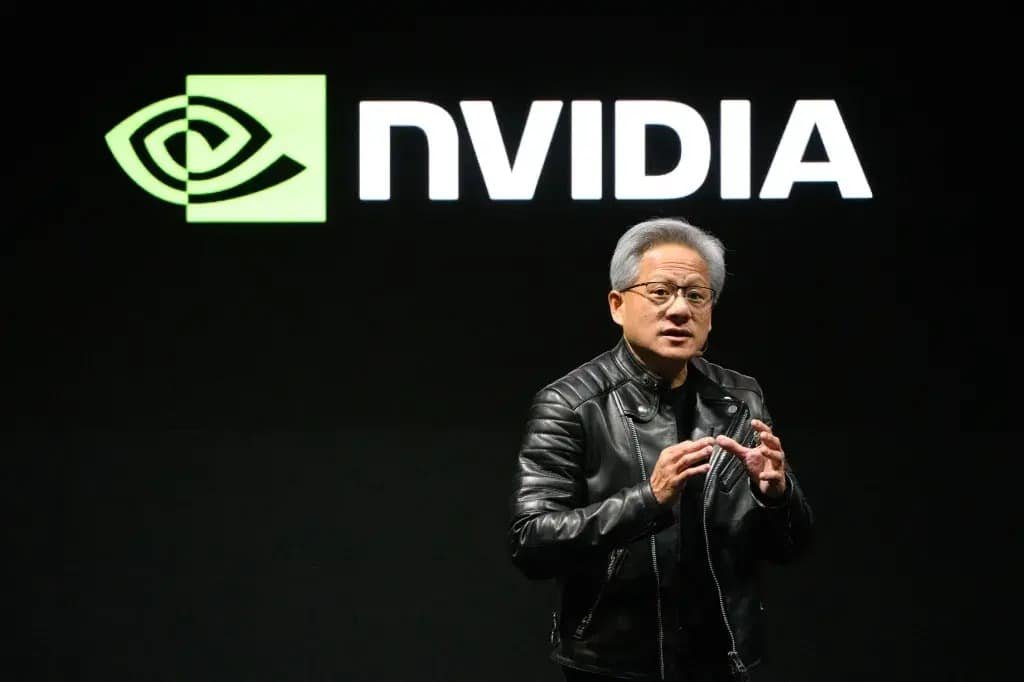
In an internal email obtained by CNBC, Nvidia CEO Jensen Huang said the agreement would expand Nvidia’s AI processing capabilities. He stated that Nvidia plans to integrate Groq’s low-latency processors into its AI factory architecture. The move aims to support broader AI inference and real-time computing workloads.
Huang clarified that Nvidia is licensing Groq’s intellectual property and onboarding selected employees. He stressed that Nvidia is not acquiring Groq as a full company. This approach reflects a broader industry trend of securing technology and talent without full mergers. In September 2025, Nvidia invested more than US$900 million to onboard executives and employees from AI hardware startup Enfabrica while licensing its technology.
NVIDIA Groq AI: Deal Highlights Intensifying Competition in AI Chip Development

Major technology firms continue to invest heavily in AI talent and hardware. Companies such as Meta, Google, and Microsoft have pursued similar licensing and acquisition strategies. Nvidia has expanded its strategic investments in AI-focused startups, including Crusoe, Cohere, and CoreWeave.
The company also announced plans to invest up to US$100 billion in OpenAI. Nvidia committed to supplying at least 10 gigawatts of its products to support AI infrastructure. These moves highlight Nvidia’s growing influence in the AI cloud and hardware ecosystem.
Groq has shown rapid growth, targeting revenue of around US$500 million in 2025. Demand for AI accelerator chips that speed up inference tasks in large language models has driven this growth. Groq was not actively seeking a sale before Nvidia approached. The development suggests strategic alignment rather than financial distress. Founded in 2016 by engineers including Jonathan Ross, a co-creator of Google’s tensor processing unit (TPU), Groq positioned its technology as an alternative to Nvidia’s graphics processing units (GPUs).
The Transaction’s Broader Implications for Engineering Innovation and Safety Standards in AI Hardware Development
The acquisition extends beyond commercial impact into engineering and safety considerations. AI chip design continues to evolve rapidly. In the short term, integrating Groq’s technology and personnel is expected to streamline Nvidia’s development pipelines and accelerate hardware innovation.
No traffic or engineering safety incidents have been linked to the transaction. However, increased investment and cooperation may strengthen quality and safety standards in chip engineering. These improvements are critical for reliable AI deployment across industries, including sectors relevant to Malaysia’s technology ecosystem.
Over the long term, consolidation within the AI chip industry could enhance innovation and efficiency. It may also support safer AI hardware deployment worldwide. Meanwhile, competitors such as Cerebras Systems continue to challenge established players. Market signals, including postponed IPO plans, reflect the sector’s complex and evolving dynamics.
Overall, Nvidia’s strategic positioning continues to expand its influence in the AI hardware landscape. The move aligns with rising engineering standards and safety considerations that support sustainable technological advancement.